Baseball Training in St. Peters, MO: Hitting, Pitching, Fielding, and More
If you live in St. Peters or elsewhere in St. Charles County, you already know how quickly a baseball season can sneak up on your family. One week, your player is taking winter swings and thinking about tryouts. Before you know it, practices are underway, games are on the calendar, and every weakness in a player's mechanics becomes much harder to address during a busy season.
That's why baseball training in St. Peters, MO can be so valuable. Consistent, focused training gives players time to develop their hitting, pitching, fielding, throwing, movement, and overall understanding of the game instead of simply hoping those skills improve through games alone.
At The Fieldhouse Training Center, we understand that becoming a better baseball player isn't about finding one magic drill. It's about learning sound fundamentals, practicing them correctly, getting useful feedback, and repeating good movements until they become more natural.
Whether you're helping a young player learn the basics or supporting a more experienced athlete who wants to take the next step, understanding what quality baseball training should include can help you make better decisions about their development.
Why Baseball Training Matters for St. Peters Players
Baseball looks simple when you're watching from the stands. Hit the ball. Throw strikes. Catch what's hit your way.
Anyone who has played the game knows it's much more complicated.
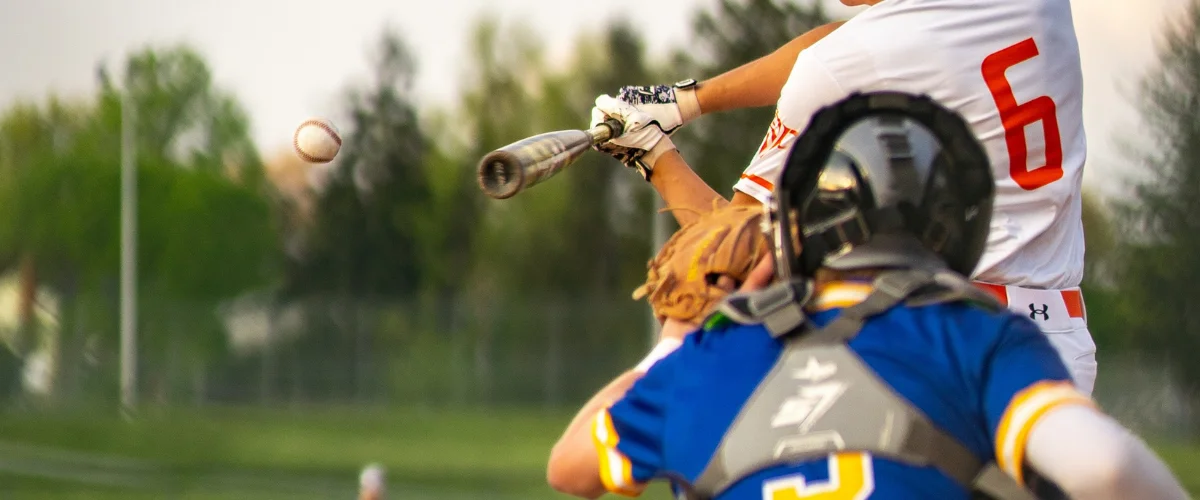
A hitter has fractions of a second to recognize a pitch, decide whether to swing, and put the barrel in the right place. A pitcher has to coordinate the entire body while maintaining control and repeating a delivery. A fielder has to read the ball, move efficiently, secure it, and make an accurate throw.
Those skills take repetition.
Games certainly provide experience, but games aren't always the best environment for learning mechanics. During competition, the priority is usually performing. Training gives players an opportunity to slow things down, identify problems, make adjustments, and build better habits.
Good training can help a player work on:
Hitting mechanics and consistency
Pitch recognition and timing
Pitching mechanics
Throwing accuracy
Fielding fundamentals
Footwork and body positioning
Catching and receiving
Baseball-specific movement
Confidence and preparation
Situational awareness
Consistency under pressure
The objective isn't simply to practice more. It's to make the repetitions count.
Year-Round Baseball Training in St. Peters, MO
Missouri weather doesn't always cooperate with baseball.
St. Peters experiences hot, humid summers, chilly winters, rain, thunderstorms, and unpredictable stretches during spring when outdoor practice plans can change quickly. That's especially frustrating because spring is exactly when many players are trying to prepare for their seasons.
A structured training environment gives players an opportunity to keep working when outdoor conditions aren't ideal.
Why Offseason Training Is So Important
The offseason is often one of the best times to make meaningful changes.
During the season, players may have practices, tournaments, schoolwork, travel, and multiple games each week. Trying to rebuild a swing or make major mechanical adjustments during that schedule can be difficult.
The offseason gives you more breathing room.
A player can break a skill into smaller pieces, practice deliberately, and gradually increase speed and intensity. Instead of worrying about tomorrow's game, the focus can stay on long-term improvement.
In-Season Training Has a Different Purpose
Training shouldn't necessarily stop once games begin.
The focus simply changes.
During the season, players may need shorter, more targeted sessions designed to maintain mechanics, correct small issues, and stay sharp without creating unnecessary fatigue.
The best approach depends on the player's age, schedule, position, workload, and goals.
Hitting Training: Building a Better Swing
Hitting is one of baseball's most difficult skills, and it's also an area where players can develop bad habits quickly.
A productive hitting program goes beyond taking hundreds of swings. Players need to understand what their bodies and bats are doing.
Stance and Setup
Everything begins before the pitcher delivers the baseball.
A hitter should start from an athletic position that allows the body to move efficiently. Balance matters, but so does comfort. Two successful hitters may have noticeably different stances while still sharing strong underlying fundamentals.
Training can help players understand how their setup affects everything that happens afterward.
Load, Timing, and Rhythm
A beautiful swing isn't very useful if it's always late.
Timing is a major part of hitting development. Players need to learn how to prepare early enough to recognize a pitch while remaining controlled enough to adjust.
This becomes increasingly important as pitching gets faster and pitchers begin changing speeds more effectively.
Bat Path and Barrel Control
The goal isn't simply to swing hard.
A hitter needs to move the barrel efficiently through the hitting zone and develop enough control to make quality contact in different locations.
Drills can isolate specific parts of the swing before players put everything together at game speed.
Developing Better Pitch Recognition
As players advance, hitting becomes increasingly mental.
Is the pitch a strike? Where is it going? Is it something you should attack?
Pitch recognition drills can help players make better decisions instead of simply reacting to every pitch.
Pitching Training: More Than Throwing Hard
Velocity gets attention, but pitching requires much more than speed.
A successful pitcher needs repeatable mechanics, command, balance, body control, confidence, and an understanding of how to compete against hitters.
Building Repeatable Mechanics
Consistency is one of the foundations of effective pitching.
When a pitcher's delivery changes dramatically from pitch to pitch, location and effectiveness can become inconsistent too. Training helps pitchers understand their movements and work toward a delivery they can repeat.
Using the Whole Body
Pitching isn't just an arm action.
The legs, hips, trunk, shoulders, and arm work together as part of a coordinated movement. Efficient pitching instruction considers how the entire body contributes to the throw.
Command and Accuracy
Throwing harder doesn't automatically make someone a better pitcher.
A pitcher who can consistently locate pitches and work around the strike zone can be extremely effective. That's why throwing accuracy and command deserve dedicated practice.
Arm Care and Workload Awareness
Young players especially need sensible training.
More throwing isn't always better. Throwing volume should be appropriate for the athlete's age, physical development, season, and recent workload.
Parents should also familiarize themselves with youth pitching guidelines and league-specific pitch-count requirements. When in doubt, protecting a developing player's long-term health should take priority over squeezing in another inning.
Fielding Training: Turning Reactions Into Reliable Skills
Defense can change games, yet fielding practice sometimes receives less attention than hitting.
That's a mistake.
Reliable defenders give their teams outs, limit extra bases, and help pitchers escape difficult situations. Fielding ability can also make a player more versatile, which becomes increasingly valuable as competition increases.
Ground Ball Fundamentals
Fielding a ground ball involves several connected skills.
The player has to read the ball, move into position, control the body, receive the baseball, transition to the throwing hand, and make an accurate throw.
A mistake early in that sequence can affect everything that follows.
Quality repetition helps players become more comfortable with routine ground balls before introducing harder angles, faster speeds, backhands, forehands, and game-like situations.
Footwork Matters
Watch an experienced infielder closely and you'll notice that good defense often begins with the feet.
Efficient footwork helps players get into better positions and prepare for stronger, quicker throws.
This is why fielding drills shouldn't focus exclusively on the glove.
Fly Balls and Outfield Skills
Outfielders have their own challenges.
They need to judge balls in the air, take efficient routes, communicate with teammates, catch on the move, and make accurate throws to the correct base.
Training can help turn those decisions into habits rather than something players have to consciously think through every time.
Throwing Training for Better Accuracy and Efficiency
Throwing connects almost every defensive position.
An infielder needs to get the ball across the diamond. An outfielder may need to hit a cutoff player. A catcher needs an efficient transfer. Even routine warm-up throws can reinforce either good or poor habits.
Throwing training can focus on proper grip, footwork, body alignment, transfer speed, accuracy, and efficient mechanics.
Players should gradually increase intensity rather than immediately throwing at maximum effort, especially after an extended break from baseball.
Catching Skills Deserve Specialized Attention
Catching is one of the most demanding positions on the field.
Catchers receive pitches, block balls, throw to bases, communicate with pitchers, handle plays around home plate, and often have one of the best views of everything happening during a game.
Training may include:
Receiving fundamentals
Blocking technique
Throwing mechanics
Transfers
Footwork
Stance and positioning
Communication
Game awareness
Because the position involves unique movements and responsibilities, dedicated catching work can be extremely valuable for players who spend significant time behind the plate.
Baseball Training Should Match the Player's Age and Ability
A young beginner doesn't need the same training program as an experienced high school player.
That sounds obvious, but it's an important point.
Younger players generally benefit from learning basic movement patterns and developing confidence with fundamental skills. As athletes mature, training can become more detailed, position-specific, and demanding.
Younger Players
For developing players, training should establish strong fundamentals without making baseball unnecessarily complicated.
The priorities often include catching, throwing, basic hitting mechanics, fielding positions, coordination, and understanding how the game works.
Intermediate Players
As players gain experience, they can begin refining their mechanics.
Training might include more challenging hitting drills, position-specific defensive work, increased throwing accuracy, situational baseball, and greater attention to consistency.
Advanced Players
Older and more competitive players often need targeted development.
Small mechanical issues can matter more as pitching speeds increase and competition improves. Training may therefore become more detailed, with greater emphasis on efficiency, execution, preparation, and position-specific skills.
How Often Should a Baseball Player Train?
There isn't one schedule that works for every athlete.
Age, experience, school commitments, team practices, games, tournaments, position, and physical workload all matter.
The key is consistency without unnecessary overload.
One focused session can be more productive than several unfocused practices. Players also need recovery time, especially when throwing at higher intensities.
If your player is already practicing or competing several days each week, additional training should complement that workload rather than simply pile more activity on top of it.
Private Training vs. Group Baseball Training
Different training formats can serve different purposes.
Individual instruction allows coaches to concentrate closely on one player's mechanics and needs. That can be useful when addressing a specific swing issue, pitching movement, throwing problem, or defensive skill.
Group training has different benefits. Players can learn alongside others, experience competitive drills, and practice situations that require teammates.
Neither format is automatically better in every situation.
The right choice depends on what your player needs to accomplish.
What Makes Baseball Practice Productive?
Simply spending an hour in a training facility doesn't guarantee improvement.
Players get more from practice when they have a purpose.
Before a session, it helps to identify one or two areas that deserve attention. During training, players should focus on quality repetitions and understand why they're performing each drill.
Afterward, ask a simple question: What did you learn today?
If your player can explain what they were working on and what adjustment they're trying to make, that's a good sign they're becoming an active participant in their own development.
The Mental Side of Baseball Training
Baseball is a game built around failure.
Even excellent hitters make outs regularly. Pitchers miss locations. Fielders make errors. A hard-hit ball can go directly at a defender while a weak blooper falls safely into the grass.
Learning how to respond is part of player development.
Training creates opportunities for athletes to experience challenges in a controlled environment. They can learn to make an adjustment after a poor swing, reset after a bad throw, and concentrate on the next repetition.
Confidence usually doesn't come from someone repeatedly telling a player to be confident. It grows when athletes prepare well and begin trusting the skills they've practiced.
How Parents Can Support Baseball Development
You have an important role, but you don't need to become your child's second coach.
One of the most useful things you can do is encourage effort, preparation, and consistency rather than focusing exclusively on game statistics.
A player can do everything correctly and still make an out.
Likewise, a player can make a poor swing and somehow reach base.
When every conversation after a game revolves around hits, errors, or strikeouts, young players can begin judging themselves only by immediate results. Instead, ask about decisions, effort, preparation, and what they learned.
That keeps the focus on development.
Choosing Baseball Equipment for Training
Players don't need every gadget available to improve.
At a basic level, most athletes need properly fitted baseball equipment appropriate for their age, position, and level of competition. Depending on the training session, that may include a glove, bat, batting helmet, baseball shoes, protective equipment, and catcher's gear.
Before purchasing a bat, always confirm the requirements of your player's league or governing organization. Bat standards can differ by age and competition level.
A bat that feels comfortable but isn't approved for your player's league won't do much good on game day.
Leading Baseball Equipment Manufacturers Players Know
Several established manufacturers produce baseball bats, gloves, protective equipment, training gear, and accessories used by players across many competitive levels today.
Rawlings: Known for baseball gloves, protective equipment, balls, bats, and gear designed for multiple competitive levels worldwide.
Wilson: Produces widely used baseball gloves, equipment, accessories, and training products for developing and experienced players alike.
Easton: Offers baseball bats, helmets, protective gear, bags, and accessories for youth and competitive baseball players nationwide.
Louisville Slugger: Long associated with baseball bats, while also offering gloves and equipment for players at various levels.
Marucci: Manufactures baseball bats, gloves, protective equipment, bags, apparel, and accessories for serious players and teams nationwide.
Preparing for Tryouts
Tryouts can make players nervous, particularly when they're entering a new age group or competing for a school or select team.
Preparation helps.
Instead of trying to overhaul everything immediately before a tryout, players should work consistently beforehand. That gives skills time to become comfortable.
A well-prepared player should be ready to demonstrate basic abilities such as:
Throwing accurately
Catching routine balls
Fielding ground balls
Tracking fly balls
Running and moving athletically
Making consistent contact
Listening to instructions
Responding positively after mistakes
Coaches aren't necessarily expecting perfection. They often want to see how a player moves, competes, learns, and responds.
Common Baseball Training Mistakes to Avoid
One common mistake is chasing complicated drills before mastering basic skills.
Social media can make unusual drills look appealing, but complicated doesn't automatically mean effective. Fundamentals still matter.
Another mistake is training only the skills a player already enjoys. Hitters naturally want to hit. Pitchers may want to pitch. But complete players also need throwing, fielding, movement, and situational awareness.
Finally, don't confuse fatigue with progress.
A player doesn't have to finish every session exhausted for training to be successful. The goal is improvement, not simply doing as much work as possible.
Why Consistency Usually Beats Occasional Intensity
Imagine taking 500 swings one Saturday and then not touching a bat for three weeks.
Now compare that with regular, focused practice spread across those same weeks.
For most players, the second approach provides better opportunities to reinforce movement and make adjustments.
Baseball development is cumulative.
One practice builds on another. Players learn something, repeat it, struggle with it, adjust, and eventually begin performing the skill more naturally.
That's why you should think about training as a process rather than a quick fix.
Professional Baseball Training From an Experienced Team
Our experienced team has provided baseball training for years, helping players develop skills through professional instruction, focused practice, and consistent support.
As with most things in life, working with knowledgeable professionals can help you get better results and avoid wasting money and time on ineffective training. If you're ready to have your player's development tackled by our team of industry experts, contact The Fieldhouse Training Center at [cgv tel] so we can get started.
Frequently Asked Questions About Baseball Training in St. Peters, MO
What age should my child start baseball training?
Players can begin learning baseball fundamentals at a young age, provided instruction matches their developmental level.
For younger children, the focus should be simple: learn how to throw, catch, hit, move, and enjoy the game. As players get older, instruction can gradually become more detailed and position-specific.
How often should my child attend baseball training?
The right frequency depends on your player's age, goals, current schedule, and workload.
Consistency matters more than simply packing in as many sessions as possible. Training should fit alongside team practices and games while leaving enough time for recovery, particularly for players who pitch or throw frequently.
Can baseball training help my child become a better hitter?
Yes. Focused hitting instruction can help players understand their stance, balance, timing, bat path, pitch recognition, and overall swing mechanics.
Improvement still requires practice. A coach can identify adjustments and teach the movement, but players need consistent repetitions to make those adjustments feel natural.
Does pitching training only focus on throwing faster?
No. Velocity is only one part of pitching.
Pitchers also need mechanics, command, balance, body control, consistency, and an understanding of how to attack hitters. Younger pitchers should especially focus on efficient movement and sensible throwing workloads rather than chasing velocity alone.
Is indoor baseball training useful during winter in St. Peters?
Yes. Indoor training can be especially useful during Missouri winters and periods of wet or unpredictable weather.
Instead of waiting for ideal outdoor conditions, players can continue working on skills such as hitting, throwing, pitching, catching, and fielding. Staying consistent through the offseason can also make the transition into spring practices easier.
Should my child train during baseball season?
In-season training can be useful when it's managed correctly.
The goal usually shifts from major mechanical changes toward maintaining good habits and addressing smaller issues. Training volume should also account for games, team practices, tournaments, pitching workloads, and recovery.
What should my child bring to baseball training?
Requirements depend on the type of session, but players commonly bring their glove, bat, batting helmet, baseball shoes, water, and any position-specific protective equipment they normally use.
Catchers may need additional catching equipment. It's always smart to confirm what will be needed before a session.
How can I tell if baseball training is actually helping?
Don't judge progress only by batting averages, strikeouts, or game results.
Look for improvements in mechanics, consistency, decision-making, confidence, movement, throwing accuracy, and the player's ability to explain what they're working on. Game performance matters, but development isn't always perfectly reflected in short-term statistics.
Build Better Baseball Skills in St. Peters, MO
Baseball rewards preparation.
The players who continue improving are usually the ones who learn good fundamentals, practice consistently, accept coaching, and understand that development doesn't happen overnight. There will be great practices and frustrating ones. That's part of the game.
For families looking for baseball training in St. Peters, MO, the important thing is finding an environment where players can work purposefully on hitting, pitching, fielding, throwing, catching, and the other skills that make them more complete baseball players.
At The Fieldhouse Training Center, our goal is to help players put meaningful work into those skills and continue moving forward.
If you're ready to learn more about baseball training for your player, contact us at 636-281-2255. We can talk about what your player wants to improve and help you determine the right next step.